
© Christian Jegou


© Dotted Yeti

Creators
Director / Designer
Yeoleum Choi
Developer
Lohith Katari
Jacob Heiserman
Supervisor
Steven Hubbard
Supported by
Orton Geological Museum
Advanced Computing Center for the Arts and Design
Department of Design
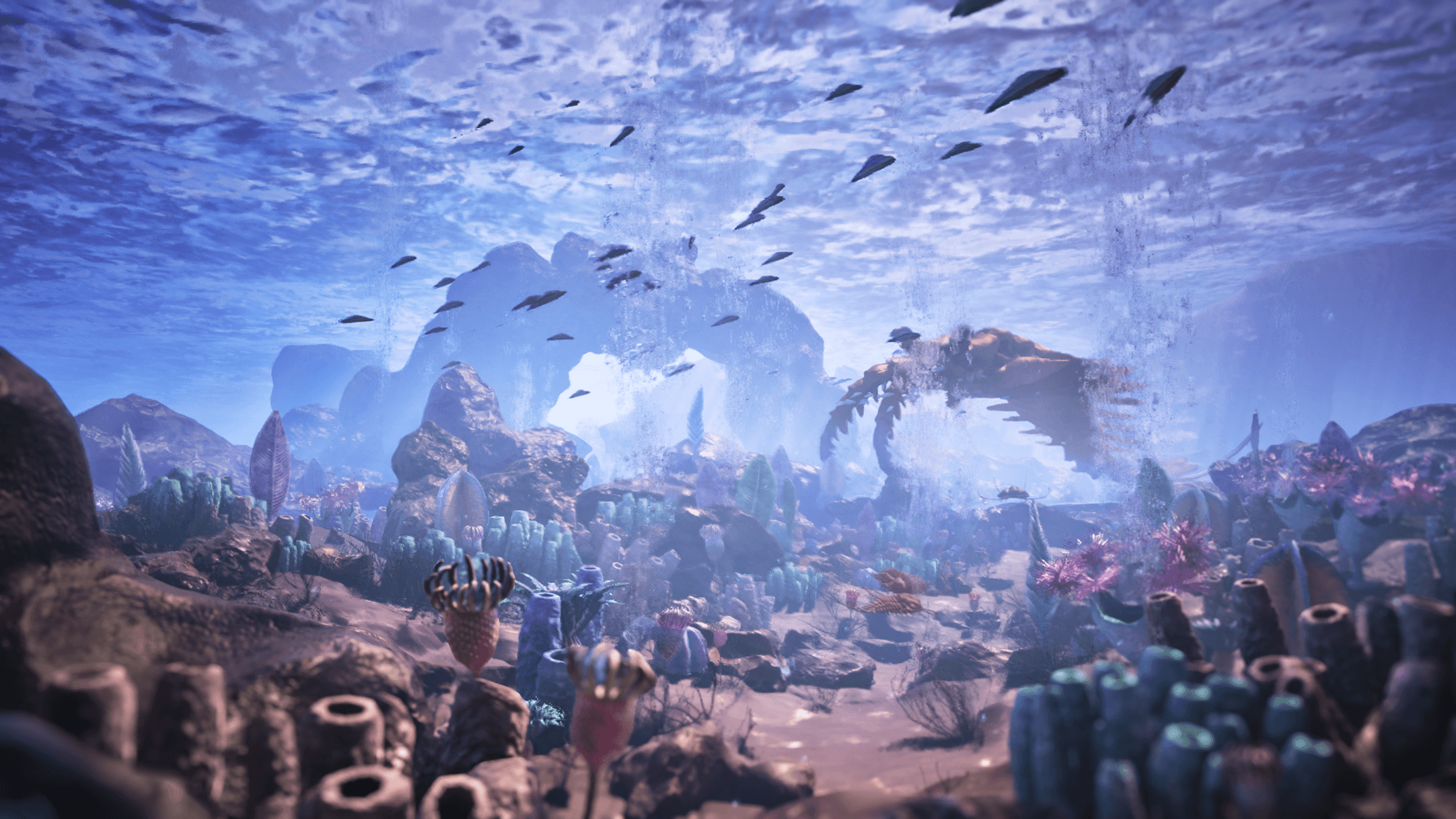
It's a spin-off of Museum of Extinction (2024).
Originally, it only covered human-driven extinction, but I extended the journey to visit environments from past natural extinction events as well.
A game-based experience exploring the Cambrian ocean. Departing from traditional text-based learning, this work utilizes a painterly aesthetic and evocative music to create a deeply immersive environment.
MUSEUM OF EXTINCTION : CAMBRIAN OCEAN





Playtime : 20-30 minutes.
Production period : 2025.01 - 2026.04 Responsible for all aspect
Software Used:
GAME PLAY VIDEO
In what ways do interactive gameplay elements, such as dynamic environmental transitions (changing maps and stages) and missions, help audiences understand the heavy themes of geological time and extinction more effectively than passive observation?
SCIENTIFIC ACCURACY
OPTIMIZATION
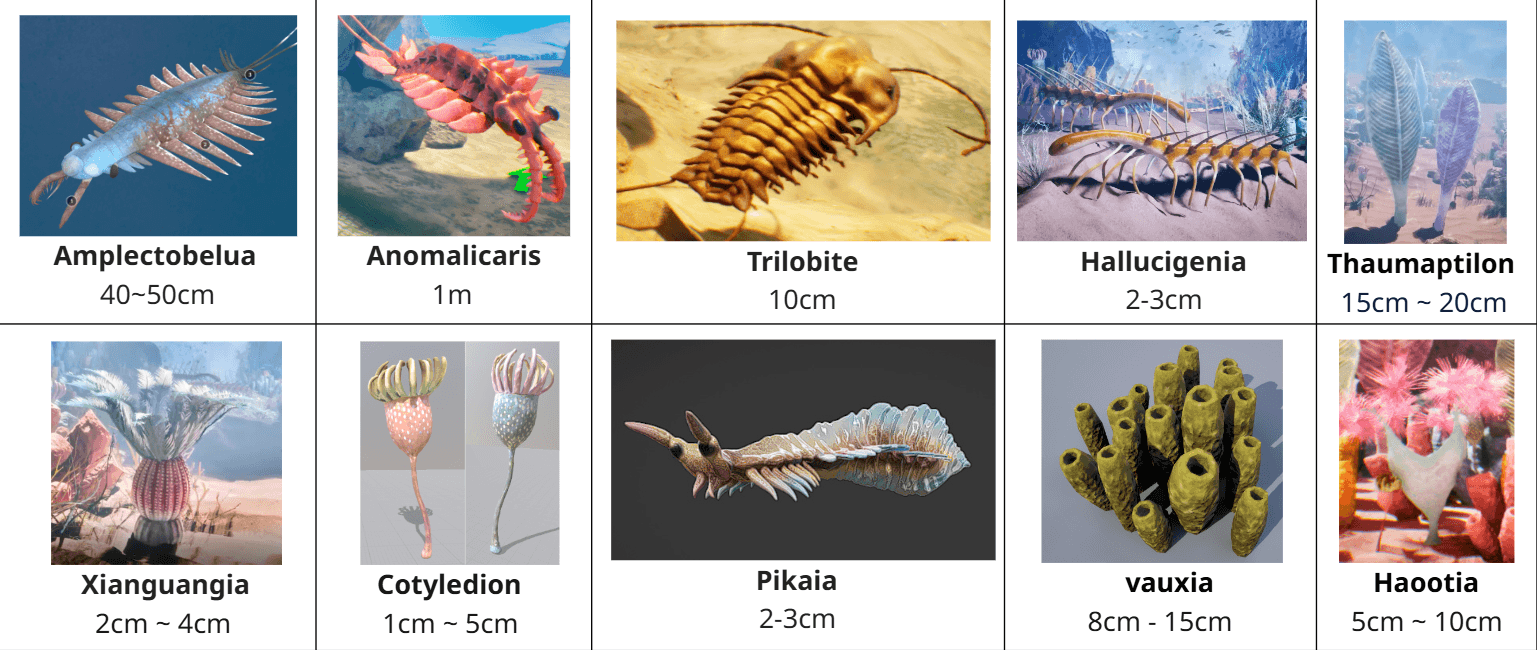
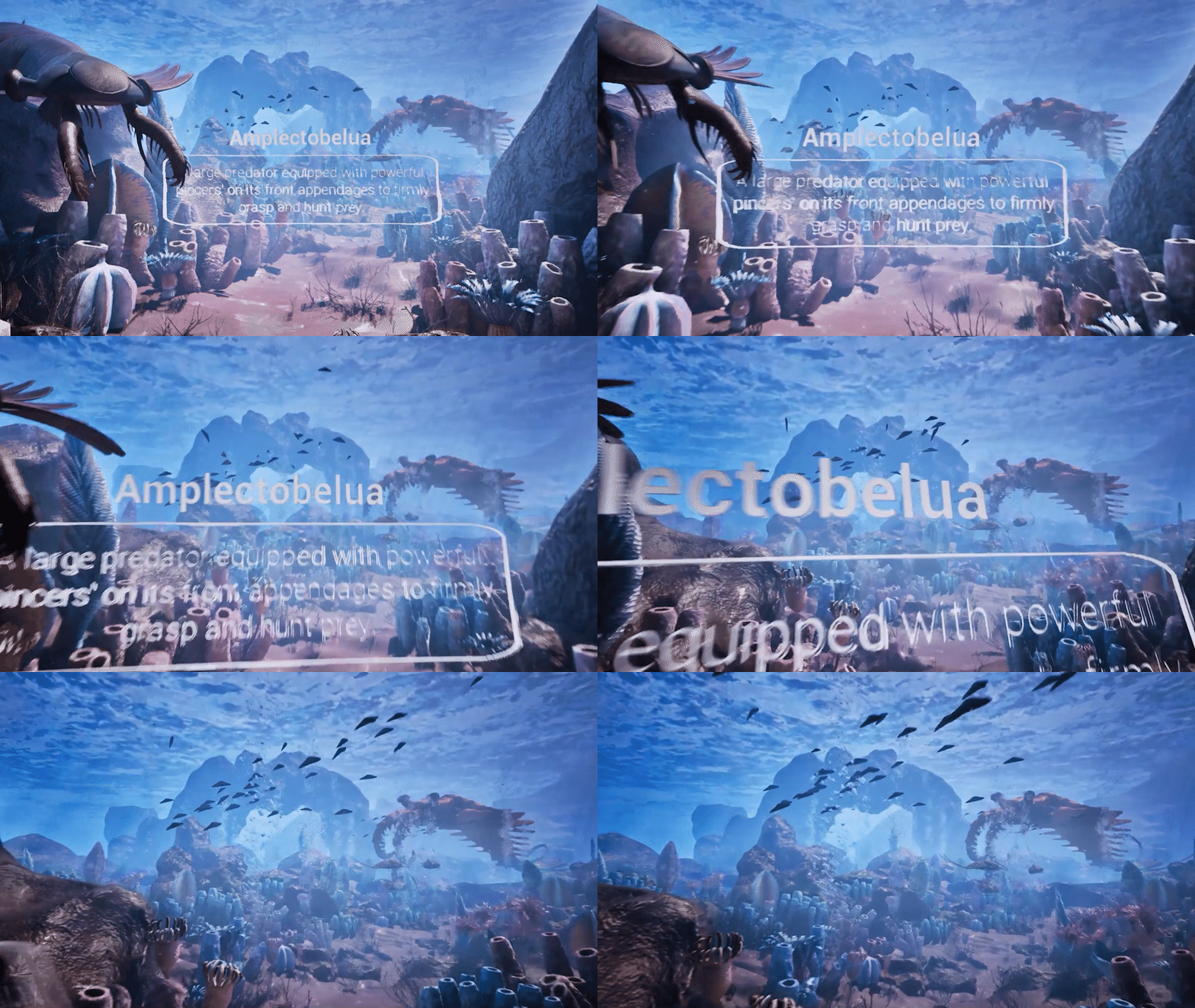
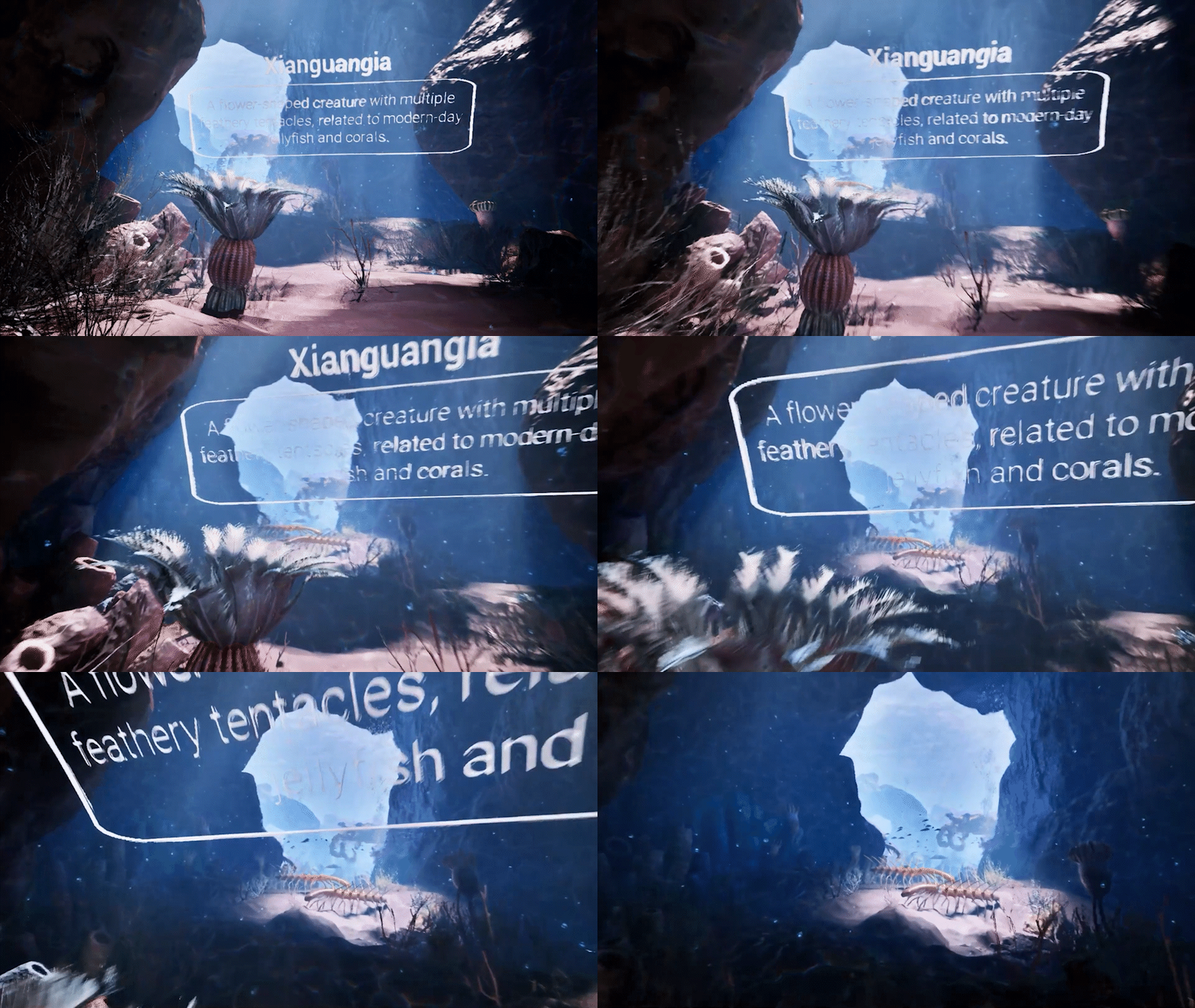


The director of the school geological museum provided most of the scientific advice for the project. In my creative process, I focused on stylizing the environments and creatures while ensuring that this artistic interpretation did not compromise scientific accuracy.
Unreal Engine 5 was highly practical for implementing detailed environmental lighting and complex materials. I specially focused on mesh optimization; to capture the vastness of the ocean while maintaining a manageable project weight, I leveraged features such as Billboards, Nanite, LODs, and Procedural Content Generation. Additionally, I researched advanced techniques like material blending to achieve a seamless, natural look for the ocean floor, sand, and marine organisms.
In my previous project, I found that an open-world game format often caused players to miss the core message. Therefore, for this project, I intentionally restricted the player's movement through controlled camera work and guided paths.
Enhancing Narrative Impact
Natural Extinction vs. Human Driven Extinction

Originally, it only covered human-driven extinction, but I extended the journey to visit environments from past natural extinction events as well.
This helps the audience build a stronger emotional connection to Earth’s history, making the reality of modern extinction hit much harder.
So I built the environment representing the Ordovician extinction
—the very first mass extinction in Earth's history — as a prototype.

Spatial Storytelling
Interactive Cinema
The audience becomes the camera. Players cannot change the fixed ending but choose where to look and how fast to move. Transitions won't be linear cuts but room-to-room. moving between eras feels like leaving one theater hall and entering another.
Players walk through doors, experiencing new eras via changes in lighting, atmosphere, and music. Directing and animation will make movement feel cinematic.
Refinement : Targeted Curation
Refinement : Targeted Curation
This allows players to scan and absorb the text information as they move through the environment. Consequently, this has helped direct attention to the narrative more effectively.
Production Notes
CAMBRIAN PERIOD
As a prototype, I aimed to create an animated digital restoration of the Cambrian ocean, where the audience experiences the environment gradually transitioning into an Ice Age, leading to the inevitable extinction of the ecosystem.
The Cambrian Period was marked by the Cambrian Explosion, a rapid and massive increase in marine life diversity that saw the appearance of most major animal groups. This era is synonymous with the flourishing of trilobites, which became the most iconic organisms of the time.
Credits!
My teammates —JP, Kahirie, Katari, and Sebastian— passionate game developers who stepped in to help with the development side of my project. We gathered at campus during summer break just to build this. Thanks to their passion and dedication, I was able to push this project so much further than I could have on my own.
I always took pride in telling playtesters, 'My friends built these parts,' because I want everyone to recognize the immense effort they poured into it.